Crate Training: How to Make the Crate a Safe Place
Choosing a crate, introducing it slowly, and how long a dog should stay inside
Quick Answer
A crate is useful for house training, travel, and keeping a dog safe when you cannot supervise. Choose one that lets the dog stand, turn around, and lie down. Introduce it gradually with meals and treats, close the door for seconds before minutes, and never use it as punishment. Adult dogs should not be crated for most of the day; puppies need even shorter stretches. Some dogs, especially those with separation distress, panic in a crate and need a different setup.
Choosing a crate
Wire crates fold flat, let air through, and often come with a divider so you can make the space smaller while a puppy grows. Plastic crates feel more enclosed, which some dogs prefer, and are usually required for air travel. Soft crates are light but are easy to chew or claw through, so they suit calm adult dogs and short trips.
Size the crate so the dog can stand without ducking, turn around, and lie flat on its side. A crate much bigger than that can let a puppy use one end as a toilet. For a growing puppy, buy for the adult size and use a divider.
Put the crate in a room where people spend time, not in a garage or basement. A bed or blanket the dog will not chew, water for longer stays, and a cover over part of the crate help many dogs settle.
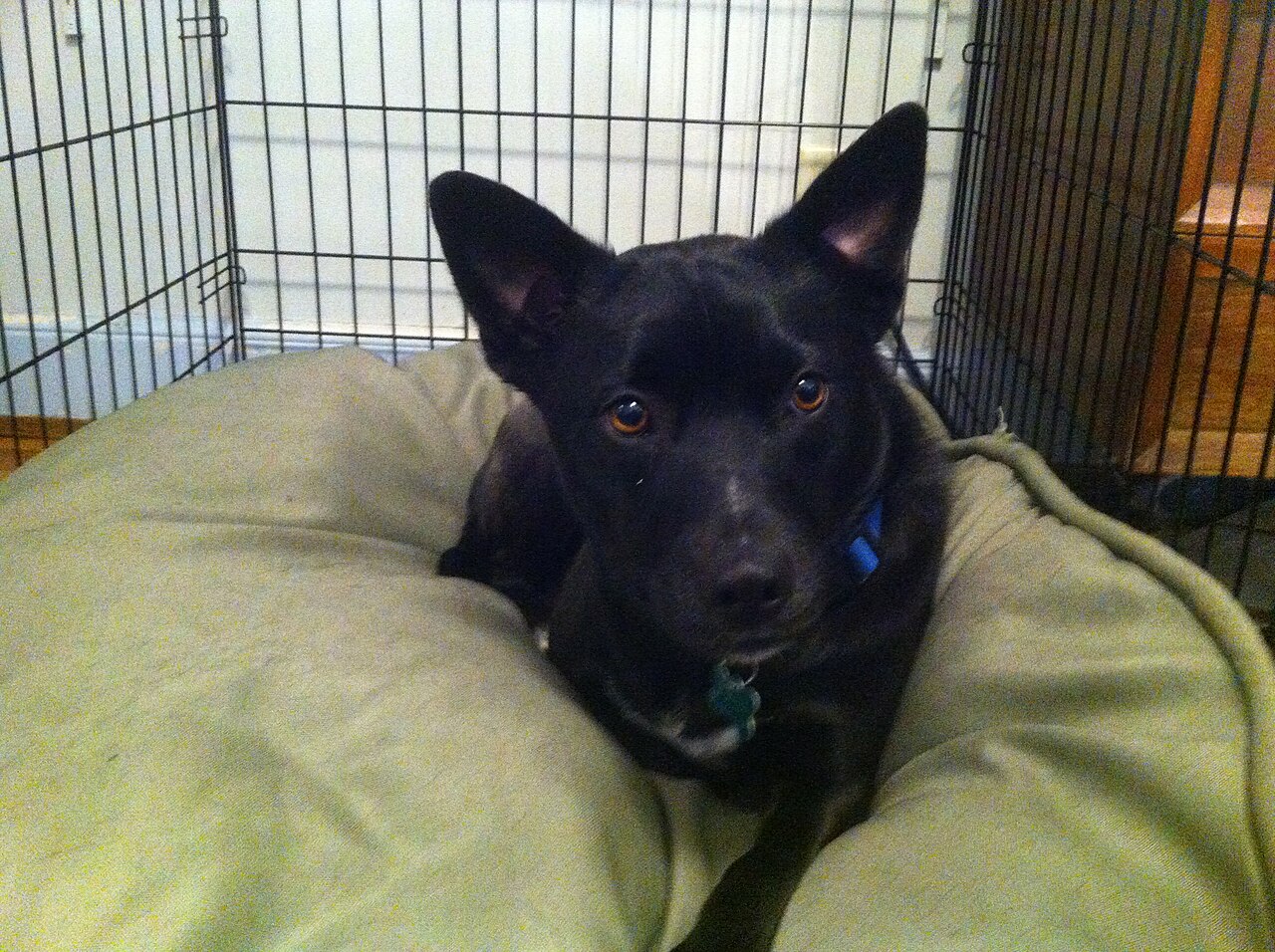
Introducing the crate step by step
Start with the door open. Toss treats near and then inside the crate and let the dog go in and out freely. Feed meals near the crate, then just inside it, then at the back. Give long-lasting chews only in the crate so it becomes the place good things happen.
Once the dog walks in readily, close the door for a few seconds while it eats, then open it before it finishes. Gradually lengthen the time, then sit nearby, then leave the room for short periods. Move on only when the dog stays relaxed. Most dogs progress over days to a couple of weeks, not in one afternoon.
Let the dog out when it is quiet. If you open the door every time a dog whines or barks, it learns that noise works. If the whining is intense, if the dog drools, pants, or tries to break out, it is panicking rather than protesting, and you need to go back several steps or stop using the crate.
How long is too long
Young puppies need trips outside every few hours during the day and often once at night, so crate time should match how long they can hold their bladder. Adult dogs can usually rest in a crate overnight, but a dog crated through the night and most of the working day is not getting enough exercise, company, or chances to toilet.
If you work long hours, plan a midday walk, a dog walker, or daycare, or use a safe pen or dog-proofed room instead. A crate is a tool for specific times, not a place for a dog to live.
Never use the crate for punishment or time-outs while angry. Take collars and harnesses off before crating so they cannot catch on the wire, and do not leave children to play with or bang on a crate while a dog is inside.
Frequently Asked Questions
Is crate training cruel?
Used well, a crate gives many dogs a quiet, den-like place to rest and keeps them safe from chewing hazards. It becomes unkind when a dog is crated for most of the day, is crated while panicking, or is sent there as punishment.
Should the crate be in my bedroom?
For a new puppy, a crate beside your bed often helps. The puppy settles faster near you, and you will hear when it needs to go out at night. You can move the crate gradually later.
My dog hates the crate. What now?
Go back to the open-door stage with meals and chews, and move more slowly. If the dog still panics, use a pen or a dog-proofed room instead, and ask your veterinarian or a qualified behavior professional about separation distress.
Should I put water in the crate?
For short stays it is not needed. For longer periods, or in warm weather, attach a bowl or bottle to the side so it cannot be tipped over.
Sources
AKC - How to crate train your dog
https://www.akc.org/expert-advice/training/how-to-crate-train-dog/
Humane World for Animals - Crate training 101
https://www.humaneworld.org/en/resources/crate-training-101
ASPCA - Separation anxiety
https://www.aspca.org/pet-care/dog-care/common-dog-behavior-issues/separation-anxiety