What to Look for in Dog Daycare and Boarding
Questions that separate a safe play group from a crowded one
Quick Answer
A good daycare groups dogs by size and play style, keeps someone watching the group the entire time, and requires current vaccines before the first day. Tour the facility, ask about rest breaks and staff ratios, and start with a half day. Boarding adds overnight housing, feeding, and a plan for medication.
Daycare and boarding are different services
Daycare is supervised daytime play. Dogs are usually sorted into groups, given rest breaks, and sent home in the evening. Boarding is overnight care. Some facilities offer both, and a dog who does well in a play group may still need a quiet kennel or a private room at night.
Fees are often charged per day for daycare and per night for boarding. A typical daycare day in many U.S. cities falls somewhere between the mid-$20s and mid-$50s, with higher prices in large cities and for one-to-one care. Extra walks, training add-ons, and medication administration change the total. Ask what is included before you compare two quotes.
Neither service replaces training. A daycare can give a social dog exercise and company. It will not fix aggression, separation distress, or housetraining on its own.
Questions to ask on a tour
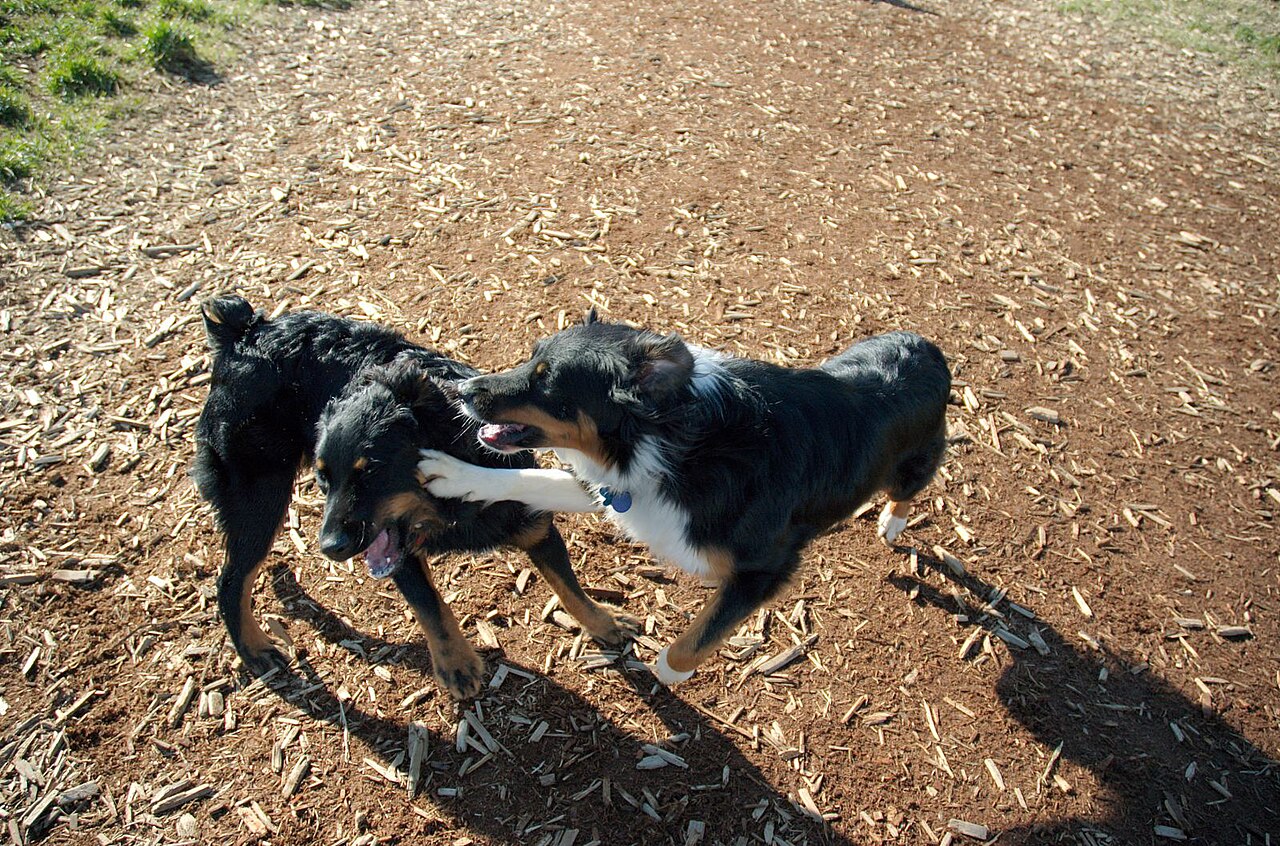
Ask how dogs are grouped, how many dogs one person watches, and what the staff do when play gets too rough. Someone should be in the play area the whole time, not watching only through a camera in another room. Ask where dogs rest, whether water is always available, and how long a dog is expected to play without a break.
Ask which vaccines and parasite preventives they require, and whether they accept dogs who are in season, intact, or still completing a puppy vaccine series. A facility that will take any dog, with no evaluation day, is taking a risk with the rest of the group.
For boarding, ask where your dog sleeps, how often they go outside at night, and how medication is recorded. If your dog cannot be kenneled, ask whether a staffed home-boarding option is available instead. Get the after-hours phone number in writing.
Which dogs do well
Daycare suits dogs who enjoy other dogs, can disengage from play, and recover quickly if another dog corrects them. It is a poor fit for dogs who guard toys or food, freeze or snap when approached, or panic in noise. Puppies should not be placed in an adult play group until they have the vaccines your veterinarian recommends and can cope with short, calm meetings.
Visit at the time of day you would actually drop off. A quiet morning tour can look different from the afternoon group. Watch body language: loose movement and taking breaks are good signs. A dog who cannot leave the group, or a room where every dog is shouting, is a reason to keep looking.
After the first day, check for new limp, torn nails, or a dog who is too tired to eat. Occasional soreness from play can happen. Repeated injuries mean the group or the supervision is wrong for your dog.
Frequently Asked Questions
Does my dog need a trial day?
Yes. A short evaluation shows whether your dog can share space and whether the staff interrupt unsafe play. A facility that skips this step is guessing.
Can daycare help with separation anxiety?
Company can help some dogs who are simply under-exercised. It does not treat separation distress. If your dog panics when left alone, talk with your veterinarian or a qualified behavior professional before using daycare as the only plan.
What should I send for boarding?
Send the food your dog already eats, enough for the whole stay plus one extra day, and any medication in its original container with clear doses. A familiar bed is useful if the facility allows it. Label everything with your phone number.
How do I compare two facilities?
Compare supervision, group size, vaccine rules, and how staff describe a problem, not only the star rating. Ask what they did the last time a dog was injured or became ill in their care.