Dog Dental Care: Brushing, Chews, and Professional Cleanings
How to keep your dog's teeth and gums healthy at home, and when they need a veterinary cleaning
Quick Answer
Most dogs have some dental disease by middle age, and much of it is under the gumline where you cannot see it. Daily tooth brushing with dog toothpaste is the most effective home care. Dental chews and diets with the VOHC seal help reduce plaque or tartar. Your veterinarian will check teeth at every exam; professional cleanings under anesthesia, with dental X-rays, are the only way to clean below the gumline.
Why dental care matters
Plaque, a film of bacteria, forms on teeth within hours of eating. If it is not removed, it hardens into tartar and spreads under the gumline, causing gum inflammation, loss of the bone that holds the teeth, loose and painful teeth, and infection. This is periodontal disease, one of the most common problems veterinarians see.
Small and toy breeds are especially prone because their teeth are crowded. Flat-faced breeds have similar problems. Signs include bad breath, red or bleeding gums, brown tartar, chewing on one side, dropping food, and pawing at the mouth. Many dogs hide dental pain and keep eating.
Dental pain and infection affect a dog's comfort and quality of life, which is why veterinary dental organizations treat it as a medical issue rather than a cosmetic one.
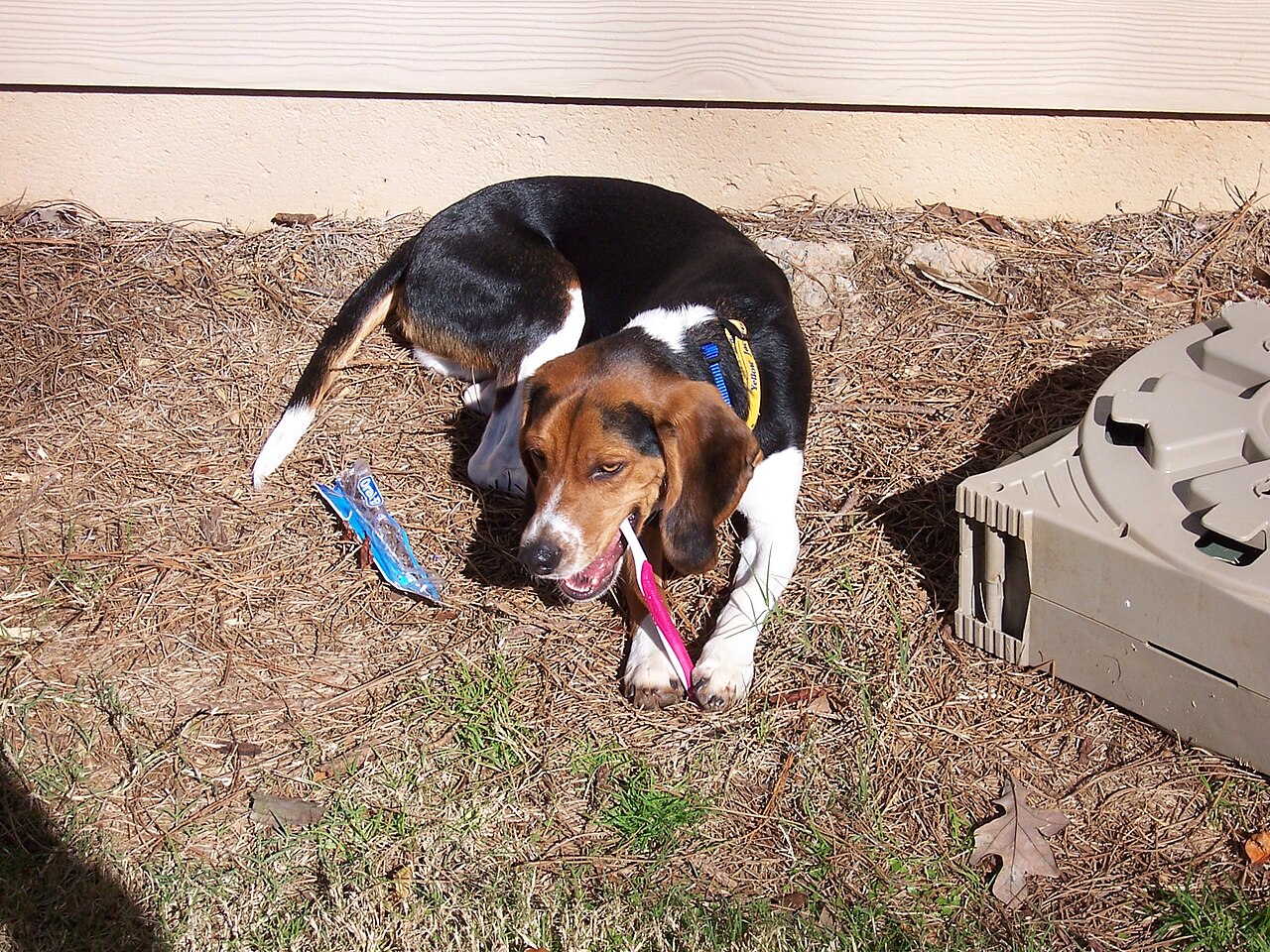
How to brush your dog's teeth
Use toothpaste made for dogs. Human toothpaste is not meant to be swallowed, and some contain xylitol, which is toxic to dogs. A soft dog toothbrush, a child's soft toothbrush, or a finger brush all work.
Introduce it gradually over a week or two. First let the dog lick toothpaste from your finger. Then rub a finger along the outer surface of the teeth and gums. Then use the brush on a few front teeth, then the back teeth, always rewarding afterward. Focus on the outer surfaces, especially the upper back teeth and the canines; the tongue keeps the inner surfaces cleaner.
Aim for daily brushing. Every other day helps less, and brushing once a week does little because plaque hardens into tartar within days. Keep sessions under a minute, and stop and try again later if the dog struggles.
Chews, products, and professional cleanings
The Veterinary Oral Health Council (VOHC) reviews evidence for dental chews, diets, water additives, and wipes and awards a seal to products that reduce plaque or tartar. These help alongside brushing but do not replace it.
Avoid very hard chews such as antlers, bones, hooves, and hard nylon toys, which commonly fracture teeth. A useful rule is that if you cannot dent the chew with a thumbnail or would not want to be hit on the knee with it, it is too hard.
A professional dental cleaning is done under general anesthesia, with dental X-rays to look below the gumline, cleaning above and below the gums, and treatment of diseased teeth. Anesthesia-free cleanings only scrape visible tartar and cannot clean or assess under the gums, and the American Veterinary Dental College advises against them. Your veterinarian will recommend how often your dog needs a cleaning.
Frequently Asked Questions
Is bad breath normal for dogs?
Mild odor right after eating can be normal, but persistent bad breath is usually a sign of dental disease and should be checked. Rarely, it points to other illness.
Is anesthesia safe for an older dog?
Age itself is not a disease. Your veterinarian will run bloodwork and assess the heart before anesthesia, and monitoring is much more advanced than it used to be. Leaving painful dental disease untreated also carries risk.
Can I scrape tartar off myself?
No. Scraping roughens the tooth surface, can injure gums, and does nothing below the gumline where the real damage occurs.
Do dogs need teeth pulled?
Sometimes. Fractured, loose, or badly infected teeth are often extracted because they are painful. Most dogs eat comfortably afterward, even with several teeth removed.